Many Latino families in the United States will gather around the kitchen table to participate in a holiday family tradition known by some as a "tamalada." A tamalada is a tamal-making session creating dozens of individually wrapped servings of steamed entrees.
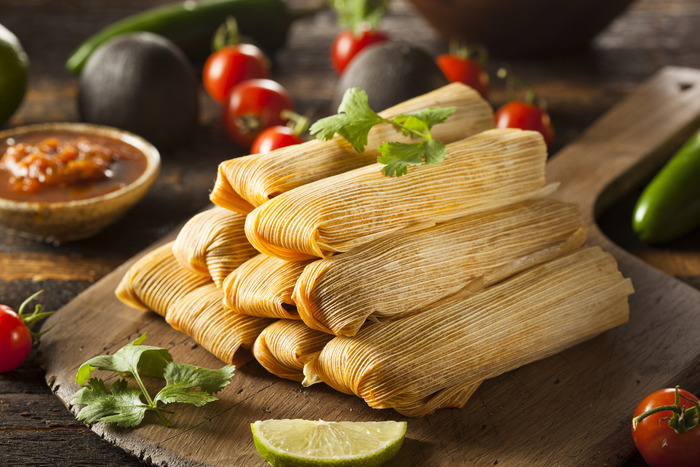
The tamal is a dish with roots in Mesoamerican culture that has taken different variations throughout Latin America. Other versions are known as pasteles or hallacas and may use banana leaves to cover the ingredients, while tamales are cooked in corn husk-wrapped bundles, filled with a corn-based dough that encases a tasty filling, usually meat or poultry.
Since tamales, pasteles and hallacas are traditionally made at home, the USDA reminds families to include food safety in your preparation.
Clean: Wash your hands before and after handling tamal ingredients and clean and sanitize surfaces where you will prepare the tamales. Germs that cause food poisoning can survive in many places and spread around your kitchen.
Separate: Don't cross-contaminate. Raw meat and poultry can spread germs to surfaces where other ingredients are being prepared. Use different utensils, plates and cutting boards to prepare raw meat and poultry.
Monitor: Making tamales is a lengthy process. Leaving cooked or raw food ingredients out too long at room temperature can cause bacteria to grow to dangerous levels that can cause foodborne illness. Bacteria multiplies rapidly in the Danger Zone, temperatures between 40 degrees F and 140 degrees F. If you plan to make tamales for more than 2 hours, here are some safety guidelines:
- Keep your cooked meat or poultry simmering on the stove or a slow cooker at a minimum of 140 degrees F.
- Chill your corn dough (masa) that contains animal lard or broth at 40 degrees F or below in your refrigerator and bring out small amounts at a time to keep your assembly line going.
Cook: Cook meat or poultry used to stuff your tamal to a safe internal temperature. Whole meats cook to 145 degrees F. Ground meats cook to 160 degrees F. Poultry (whole or ground) cook to 165 degrees F. When you are ready to steam your tamales, they should reach a safe internal temperature of 165 degrees F, no matter which type of meat or poultry is used.
Chill: Once your tamales are removed from the stove and served, any tamales not consumed within 2 hours should be refrigerated. Tamales can be stored in the refrigerator for up to 4 days. On the fourth day, you must either consume, discard or freeze those tamales for another day. Frozen tamales should stay safe indefinitely if frozen within those 4 days. For best quality, defrost and reheat tamales to a safe internal temperature of 165 degrees F within 6 months.
If you have any questions about food safety, you can call the USDA Meat and Poultry Hotline at 1-888-MPHotline (1-888-674-6854), email MPHotline@usda.gov, or chat live at ask.usda.gov from 10 a.m. to 6 p.m. Eastern Time, Monday through Friday to reach a food safety specialist in English or Spanish.





Comments
Post a Comment